🌍
More international than most Tokyo nightlife districts
English is relatively common around nightlife venues, and it's normal to see a mix of travelers, international residents and Japanese customers.
Roppongi is one of Tokyo's most international nightlife districts: bars, clubs, late-night restaurants, hotel lounges, expats, travelers, locals and people who somehow decided the last train was tomorrow's problem.
This guide covers the useful stuff — what kind of night Roppongi is good for, how it compares with Shibuya and Shinjuku, what happens after the last train, what solo visitors should know, and how to avoid the obvious tourist mistakes.
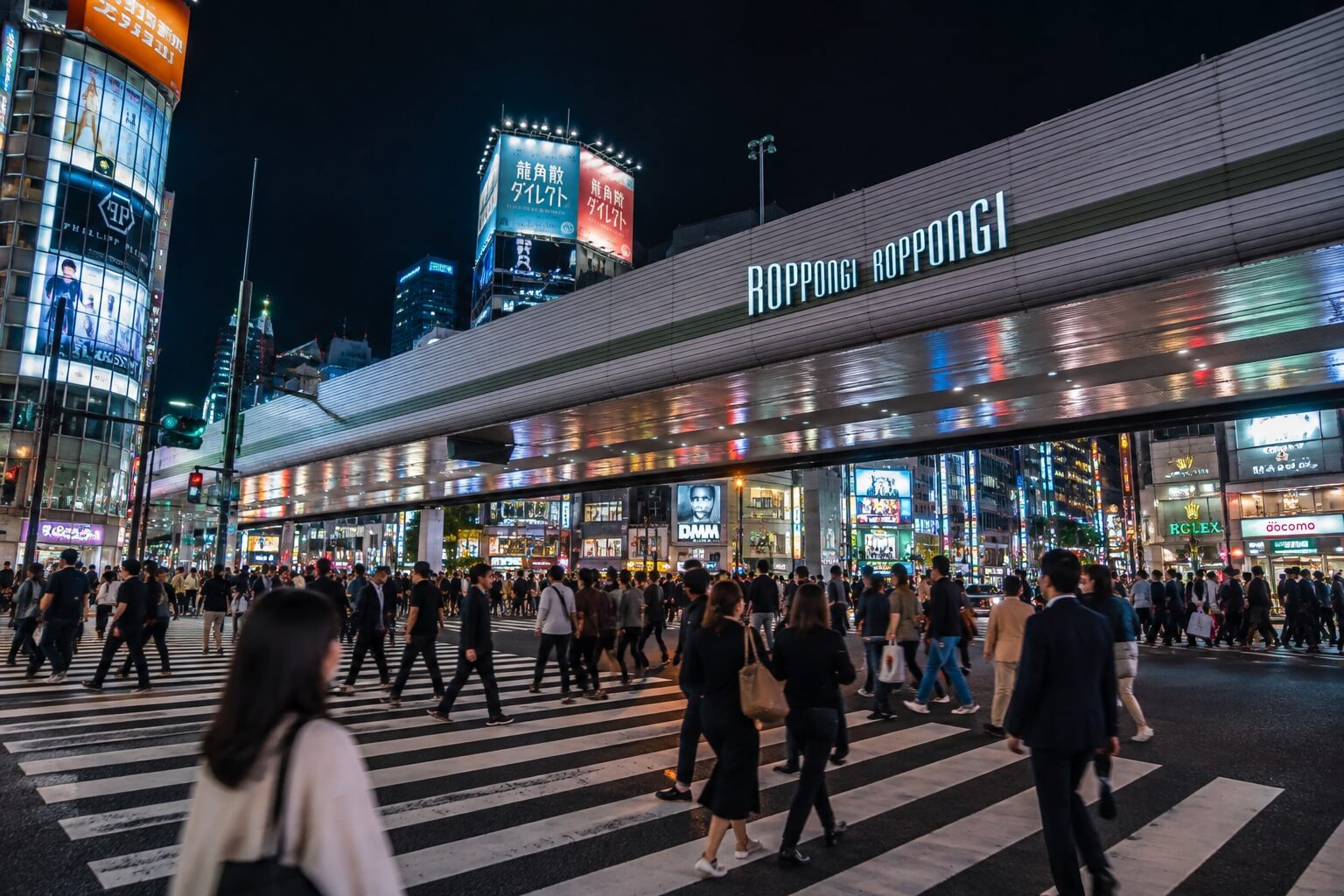
Roppongi's biggest advantage is variety packed into a relatively small area. You can start in a casual bar, move somewhere louder, end up in a club, and still be within walking distance of your previous stop.
English is relatively common around nightlife venues, and it's normal to see a mix of travelers, international residents and Japanese customers.
Roppongi is good for a multi-stop night rather than committing to one place. Many venues are close enough that changing atmosphere takes only a few minutes.
Early evening can feel surprisingly calm. Around 10 p.m. onward the nightlife becomes more obvious, and after the last trains the remaining crowd becomes more committed.
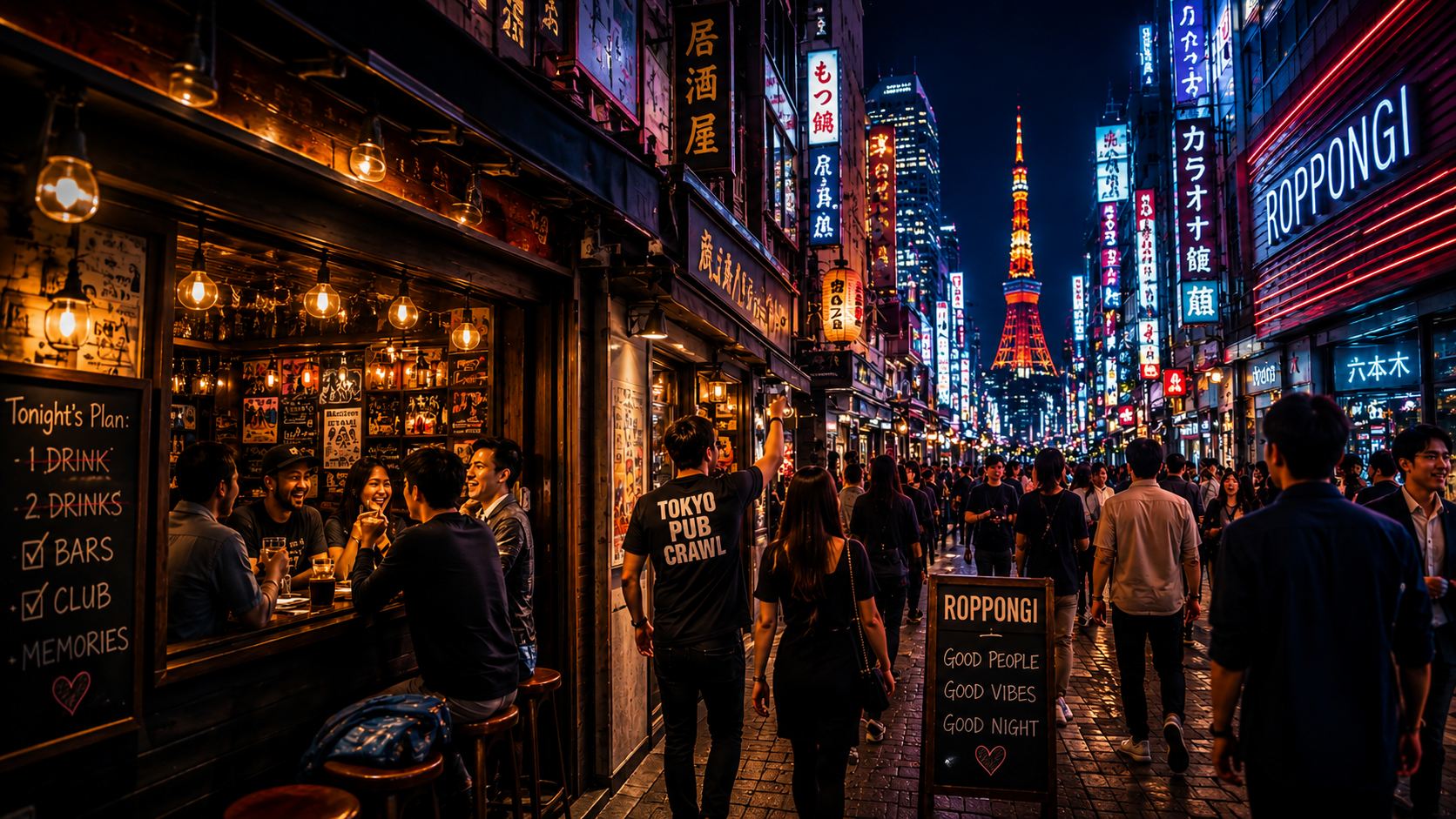
The area contains very different kinds of nights. Knowing what you're looking for matters more than blindly following whichever person is yelling outside a building.
Best if your priority is talking, meeting people, starting relatively early, or warming up before somewhere louder. This is the easiest category for solo travelers.
Better later in the evening. Music, door policies, cover charges and dress expectations vary from venue to venue, so check the specific place before treating Roppongi as one giant club.
Roppongi also has a completely different upscale side around major hotels and developments. Good for dates, skyline drinks and nights where “shots with strangers” was not the assignment.
One underrated advantage of Roppongi is how easy it is to find food late. The post-drinking meal is part of the night for a lot of people in Tokyo.
There isn't a universal “best nightlife area.” They solve different problems.
| Area | Best for | Typical feel | Solo friendliness |
|---|---|---|---|
| Roppongi | International nightlife, bar hopping, clubs | Mixed, social, late-night | Strong if you choose social venues |
| Shibuya | Younger crowds, mainstream Tokyo nightlife | Busy, energetic, large-scale | Moderate |
| Shinjuku | Variety, tiny bars, Kabukicho, Golden Gai | Huge range of micro-scenes | Good, especially in small bars |
Yes, you can. The trick is choosing places designed for interaction rather than trying to manufacture conversation in a room where everyone arrived with their own group.
Bars with counter seating, international crowds or organized social events give you a much easier first interaction than walking straight into a packed club.
Arriving before everything becomes loud gives you time to actually meet people before the night turns into mostly music and movement.
Pub crawls and social events remove the hardest part: finding the first group to join. Once you've met a few people, the rest of the night gets dramatically easier.
Tokyo nightlife is strongly shaped by the train system. Around midnight, your night tends to divide into “go home soon” and “we may be here until morning.”
Good for dinner, first drinks and actually hearing the person next to you.
Bars fill up and people begin moving between venues.
People watching the clock start peeling away for trains. Others are clearly staying out.
Clubs, karaoke, late-night bars and food take over until early-morning transport resumes.
Roppongi is a major nightlife district, so the same common-sense rules that matter in nightlife areas anywhere matter here too.
You do not need to follow a street tout into a venue you hadn't planned to visit. If a place feels wrong, simply keep walking.
Cover charges, table charges and minimum orders vary. Ask if you're unclear rather than discovering the answer after five drinks.
Maps, train routes, translation and contact with friends all become more important, not less important, at 1 a.m.
Tokyo Pub Crawl starts in Roppongi and moves through multiple venues with an international group. The current event format includes several bar stops, followed by a club stop for guests who want to continue the night.
Yes. Its international nightlife scene and relatively compact layout make it one of the easier Tokyo nightlife districts for visitors to navigate.
It can be. Social bars, counter seating, international events and group nightlife formats are generally easier for solo visitors than large venues where everyone arrives with friends.
For bars and socializing, early-to-mid evening works well. Clubs and louder venues generally become more active later. Exact busy times vary by venue and day.
Many nightlife venues operate late, but hours vary. If you miss your last train, check the specific venue's opening hours and your first-train route rather than assuming every place stays open.
It depends on what you want. Roppongi is particularly strong for international nightlife and multi-stop nights. Shibuya tends to feel younger and larger-scale, while Shinjuku has an enormous variety of micro-scenes.
Choose a format built around interaction: a social bar, counter seating, an international event or a group activity such as a pub crawl. The environment matters more than simply picking the busiest venue.
KEEP EXPLORING TOKYO
Practical nightlife, going out solo, Roppongi after dark, the psychology of a night out, and the Japan details most visitors walk right past.