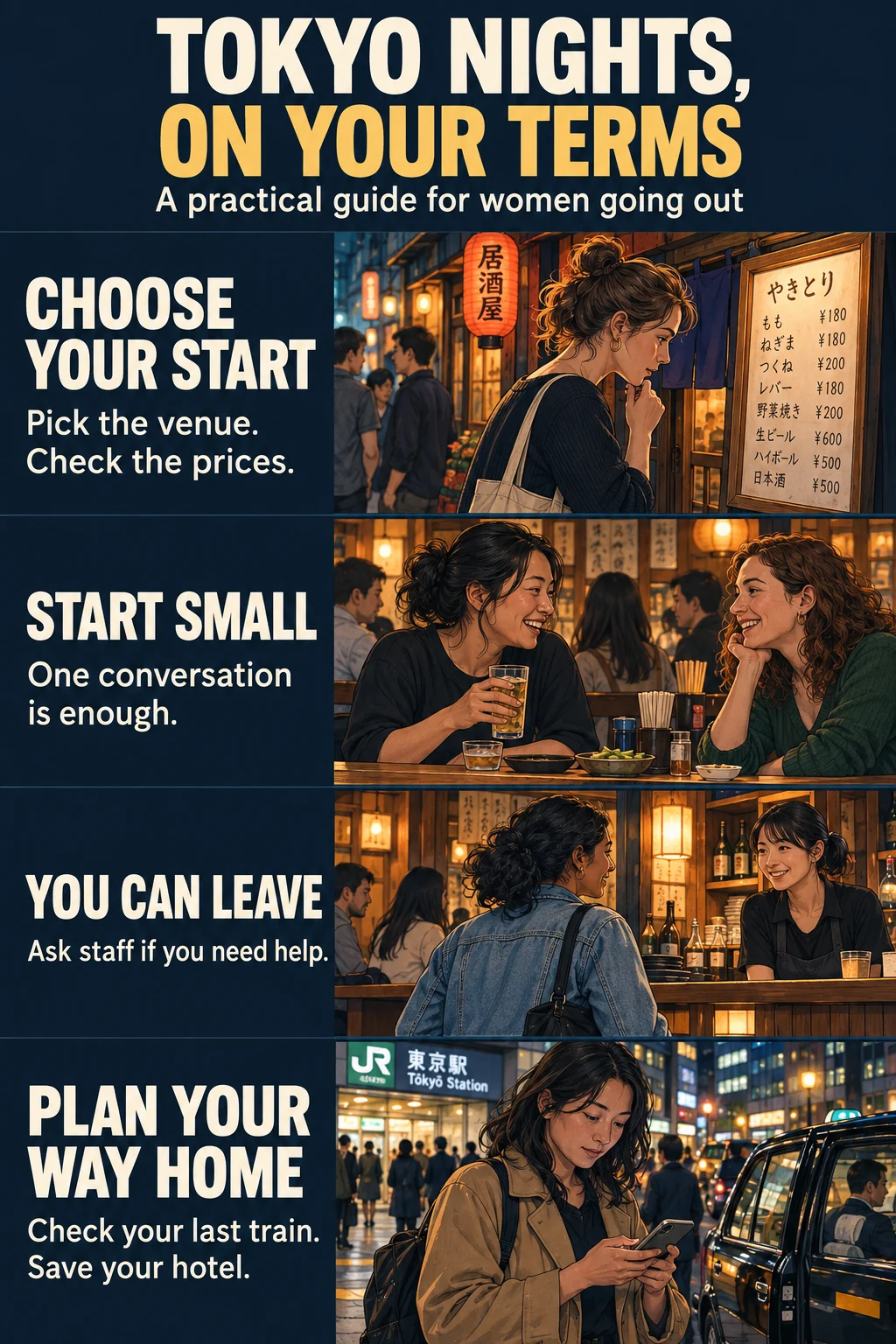
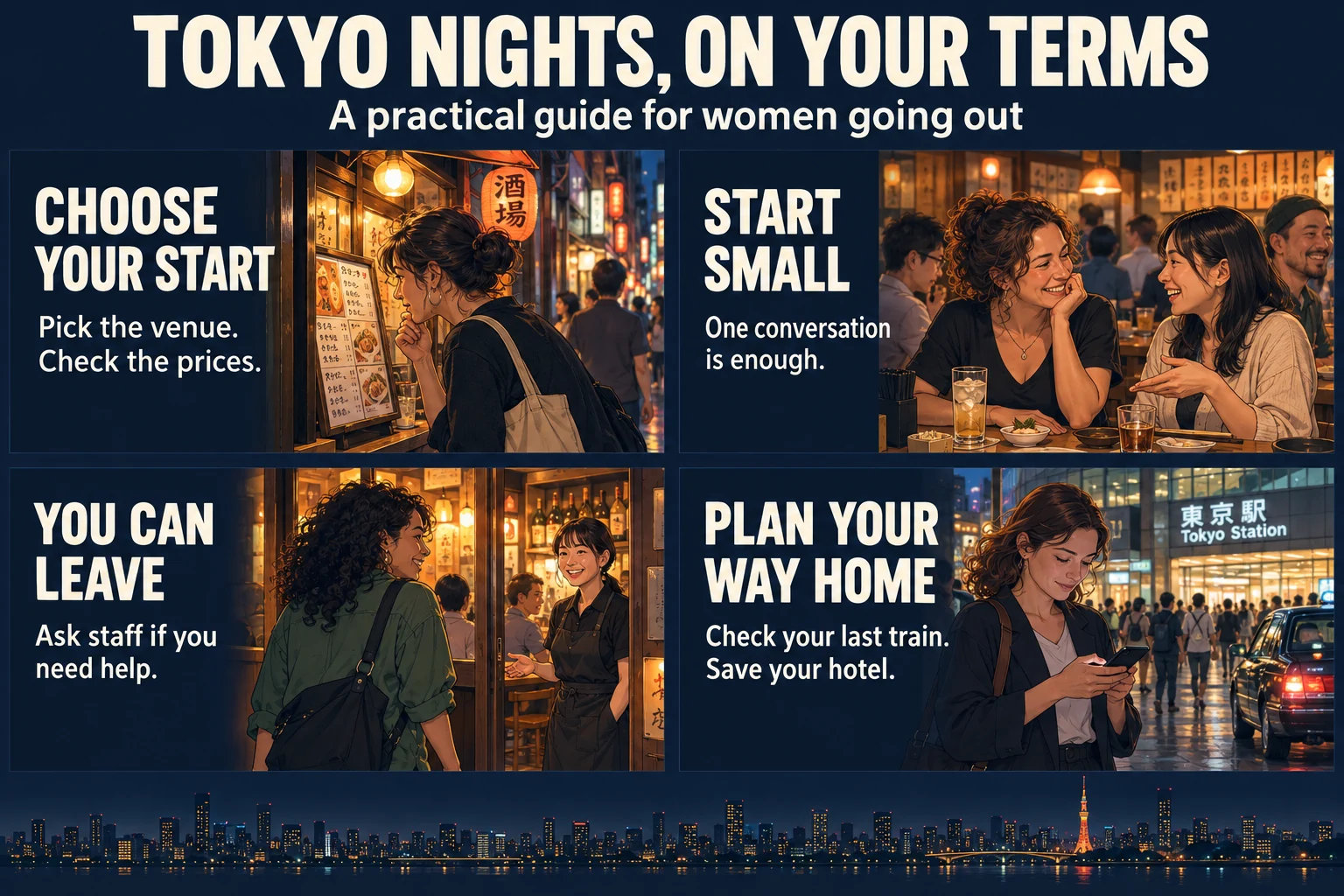
Start with one hello.
Choose a counter seat or say hi to a host. “Is this seat free?” gives you an easy opening.
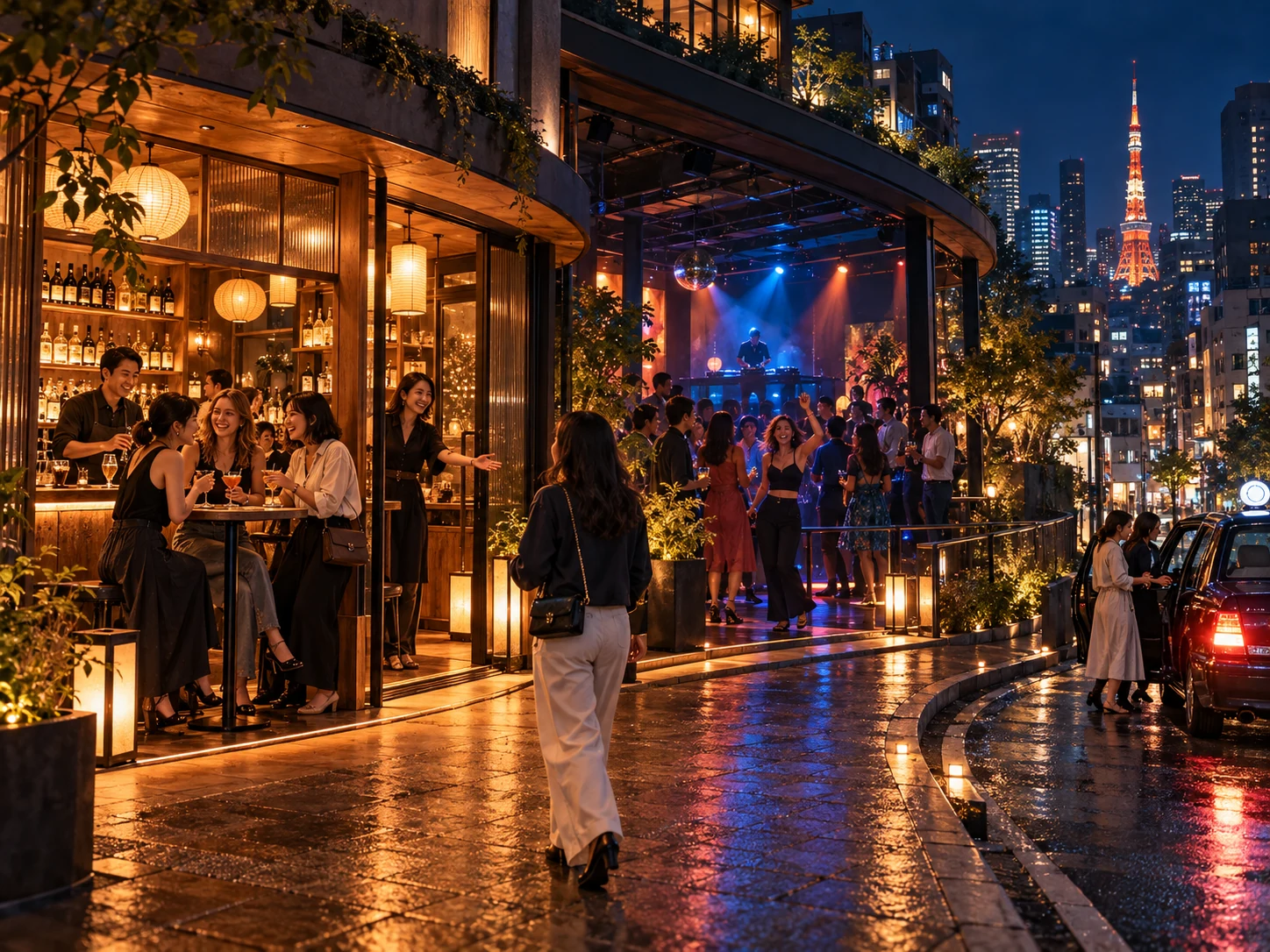
Arriving aloneTokyo nightlife for women. Come solo or with friends. Find your music, your pace, and your way home.
Guide reviewed · Design updated
Choose a counter seat or say hi to a host. “Is this seat free?” gives you an easy opening.
Arriving aloneAgree on a first stop and budget. Pick a regroup point before anyone changes venues.
Make a group planCheck tonight’s lineup, cover charge and entry rules. Choose a venue that fits your mood.
Plan the dancing partCheck your last train or allow for a taxi before the night gets going.
Getting homeIf you're going out alone—or arriving with friends who don't know the city—choose a specific venue before you choose an entire district. An easy night is a place with clear prices, approachable staff, a way to join the room and a return route you control. Here's how the three busiest starting points feel different.
Good fit: Music, crowds, dancing and friends who want an energetic night out.
If you're solo: Start at a chosen bar, event or counter seat before heading to a louder dance floor. Busy doesn't always mean easy to meet people.
Know before you go: Confirm the venue and cover charge; work out how you'll get back to your hotel after the last train.
Explore Shibuya's nightlife areas →Good fit: A choice of izakayas, smaller bars and later clubs—sometimes only a few streets apart.
If you're solo: Consider a named bar or restaurant around Shinjuku-sanchome for your first stop. Head toward Kabukicho only if you want that busier atmosphere.
Know before you go: Ignore touts offering special deals; check the actual venue rather than following someone on the street.
Explore Shinjuku's nightlife areas →Good fit: An international mix and venues where meeting English-speaking travelers can be easier.
If you're solo: Choose a staffed venue or organized social event. At a hosted event, find check-in and ask for an introduction rather than waiting alone.
Know before you go: International doesn't mean risk-free. Check prices and entry rules, and skip street promoters.
Explore Roppongi after dark →These are starting points, not safety rankings. A venue, the time of night and your own preferences matter more than a district label. I operate a pub crawl in Roppongi, so there's an obvious bias to disclose. For street-level locations and other neighborhoods, use the interactive nightlife area guide.
The first 20 minutes are often the hardest. You do not need to work the whole room; one comfortable starting point is enough.
A first-stop rule for solo female travelers: Look for somewhere you can talk to staff, see how much things cost and leave easily. A communal counter, scheduled activity or hosted social night can be more welcoming than walking straight into a packed club. Meet new people, but keep your own plan for the next stop and the trip home; you never owe anyone a second venue.
Are both people asking questions? Can you step away without it becoming a negotiation? Look for effort being returned. You do not owe someone your time because they bought you a drink.
You can end the conversation and move away. If they keep following or pressuring you, approach venue staff, security, your friends or an event host and ask for help.
Find practical help & emergency numbers →One pattern we see is friends arriving together, then finding their own conversations as the room becomes familiar. Agree on a regroup point, and let each other know before changing venues or heading home.
Want a social night beyond your own group? Compare bars, activities and social events →
Decide what you actually want to hear. Check that night’s event listing, entry price and dress code before you travel. A neighbourhood name cannot tell you what a particular dance floor will feel like.
Still deciding where to go? Compare the nightlife areas →
Tokyo's trains do not run all night. Check the final departure for your exact route, including transfers, before you head out.
Save the route and set a reminder that includes the walk to the station. Do not rely on a general “midnight” rule.
Allow for the fare in your night-out budget. Keep your hotel name and address ready to show the driver.
Make this a deliberate choice. Check the first train and find a suitable open venue or place to wait; confirm hours and costs.
Missed your train? Pause somewhere you feel comfortable and choose the option that works for you. You do not have to keep partying. For route checks and taxi basics, see the Tokyo night transport guide.
Still choosing where to stay? Compare hotel locations and late-night return routes →
A busy room can still feel awkward to enter alone. A tiny unfamiliar bar can become easy the moment somebody starts a conversation. Choose the place, check the prices and give yourself permission to leave.
Emergency in Japan: Police 110 · Ambulance / fire 119
Getting people through the door is easy to advertise. What happens after you arrive matters more. Our Friday and Saturday nights in Roppongi offer a social starting point with hosts who can help you settle in.
Host support applies during the hosted event. Plan your own transport and any time out afterward.
Normal meeting point: Bar Propaganda, Roppongi. Check-in starts at 7:00 PM on Friday and Saturday. Check the details for your date on the Events page in case the starting venue changes.
Tokyo is generally considered a safe major city, but normal nightlife precautions still apply. Avoid street touts, know your route home, keep your phone usable and use the same drink awareness you would elsewhere.
Yes. Going places alone is common in Tokyo. The bigger challenge is often the social cold start, so conversational bars, communal spaces, meetups and hosted events can feel easier than entering a huge nightclub alone.
Roppongi is one of Tokyo's most international nightlife areas and can be convenient for travelers who want English-speaking crowds and a lower language barrier. Choose venues deliberately rather than following street touts.
Yes. Solo guests are common. Staff pay attention to people arriving alone and may help make introductions when it feels natural, especially if someone seems unsure where to start.
Many people stay out until morning. Taxis, karaoke, late-night restaurants and some nightlife venues operate after trains stop. Check your exact train route before starting the night.
There is no single area that guarantees a comfortable night. Shibuya fits a high-energy, music-first plan; Shinjuku offers different pockets of bars and nightlife; Roppongi has an international scene where English-language introductions may be easier. Pick a specific staffed venue and check how you will get home.
End the conversation, move toward staff or security and ask for assistance. You do not need to negotiate or explain why you are leaving. If you feel in immediate danger, call the Japanese police emergency number 110.